Health & Safety Policy — Business Waste Removal Putney
This document sets out the Health and Safety Policy for our commercial waste operations in the service area, covering all aspects of business waste removal and rubbish collection carried out by the company. It applies to every employee, contractor and subcontractor engaged in waste handling, transport and disposal activities. The policy reflects our commitment to provide a safe working environment, to protect public health and to ensure environmental stewardship. Our aim is to minimise risk through robust procedures and to comply with all relevant statutory requirements and recognised industry standards for a professional rubbish company service area.Policy Statement
We are committed to preventing workplace injury and ill health by maintaining safe systems of work, conducting suitable and sufficient risk assessments and implementing effective control measures. The aims of this policy include: to reduce hazards associated with commercial waste removal Putney operations; to ensure safe manual handling and vehicle operation; and to maintain safe segregation, storage and transport of wastes. All activities will be planned, monitored and reviewed to ensure continuous improvement and compliance.
Responsibilities
- Management: ensure resources, training and supervision are provided; conduct regular audits and maintain records.
- Supervisors: ensure safe systems are implemented on site and vehicles; carry out site assessments and toolbox talks.
- Operatives and drivers: follow procedures for commercial rubbish removal, use PPE correctly and report hazards.
- Clients and site managers: ensure site access and information provided to the rubbish removal team is accurate and up to date.
Risk Assessment and Control Measures
Risk assessments will be carried out for typical tasks, including manual handling, lifting bulky items, vehicle loading, operating compactors and working at height when accessing bins. Control measures include use of mechanical lifting aids, team lifts, safe vehicle loading plans and exclusion zones during collections. Specific controls for hazardous or mixed loads include segregation of hazardous materials, labelling, and use of specialist disposal routes. We apply a hierarchy of controls: elimination, substitution, engineering controls, administrative controls and PPE use where necessary.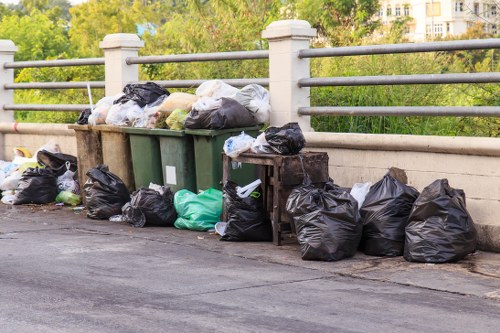
Operational Procedures
Operational procedures for business rubbish removal Putney and neighbouring service areas include pre-shift vehicle checks, load restraint, clear communication protocols and documented transfer notes. Waste types are identified at source and segregated to maximise recycling and reduce landfill. Our crews follow defined routes and schedules to minimise traffic risk and ensure public safety. In the case of contaminated or hazardous discovery, operations will cease and qualified personnel will be engaged to manage the material. Environmental protection is embedded in operational planning to reduce spill, leak or odour incidents.Training and Competence
All personnel receive induction training, job-specific instruction and regular refresher courses covering manual handling, COSHH awareness (where applicable), hazardous waste awareness, vehicle and plant operation, and first aid. Licenced activities, such as operating compaction units, are restricted to trained and authorised staff. Records of training, assessments and competency checks are maintained and reviewed periodically. Competence assurance is a core part of our safety management.Personal Protective Equipment and Hygiene
Appropriate PPE is provided and maintained, including high-visibility clothing, steel-toe boots, gloves, eye protection and respiratory protection when required. PPE is considered the last line of defence and must be used in conjunction with engineering and administrative controls. Hygiene facilities and protocols are provided to reduce infection risk from sharps and biological waste. Staff are advised on vaccinations and safe handling of clinical or sharps waste when encountered during routine commercial waste collection operations.
Incident Reporting and Emergency Response
All incidents, near misses and unsafe conditions must be reported immediately through the company incident reporting system. Incidents are investigated to identify root causes and corrective actions are recorded and monitored. Emergency response plans are in place for vehicle collisions, spillage of hazardous substances, fires and other significant events; plans include containment actions, immediate first aid, notification of emergency services and environmental agencies as required. Regular drills and reviews ensure the readiness of crews to respond safely and effectively.